
In the modern digital economy, cyber threats are no longer a distant possibility—they are a daily reality. From small startups to large enterprises, every organization is vulnerable to cyberattacks. However, the biggest threat is not always external hackers; it is often internal cyber security mistakes that leave systems exposed.
Many businesses invest in advanced tools but fail to implement proper strategies, leading to costly data breaches, operational downtime, and reputational damage. According to industry reports, a significant percentage of cyber incidents occur due to common cyber security errors that could have been easily avoided.
This blog explores the most critical cyber security mistakes, their impact, and actionable strategies to help businesses strengthen their defenses and ensure long-term security.
1. Weak Password Policies: A Common Cyber Security Mistake
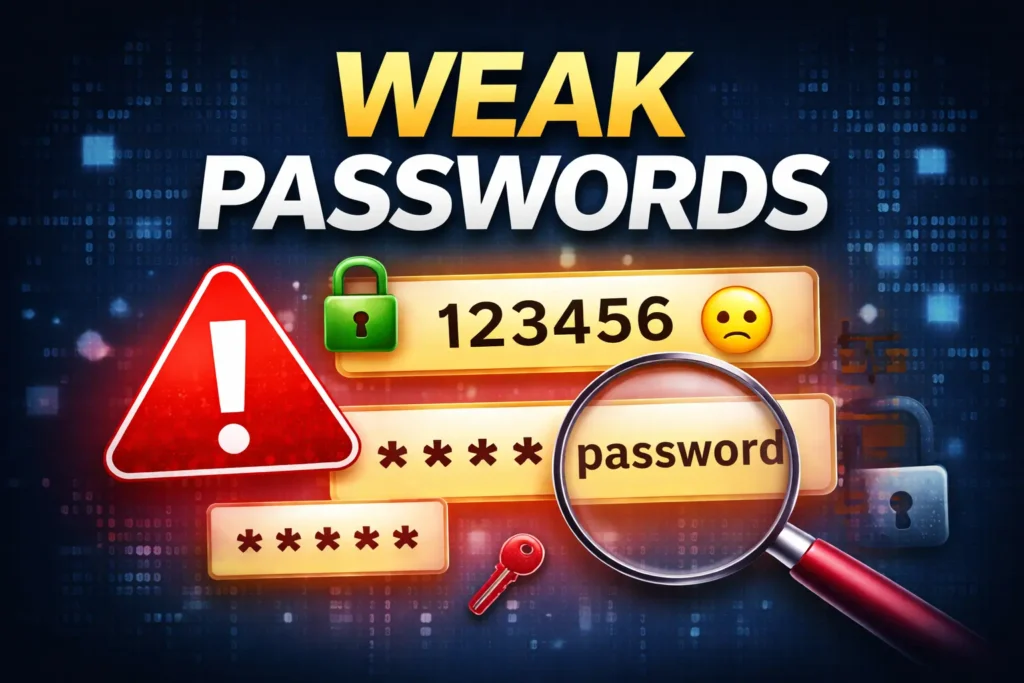
Weak passwords remain one of the most overlooked yet dangerous cyber security mistakes in organizations.
The Problem
Employees often use simple passwords like “123456” or reuse the same credentials across multiple platforms. This creates an easy entry point for hackers using brute-force attacks or credential stuffing techniques.
Business Impact
- Unauthorized access to sensitive data
- Compromised email and internal systems
- Increased risk of large-scale breaches
Best Practices for Data Breach Prevention
- Enforce strong password policies (minimum 12–16 characters)
- Use a mix of uppercase, lowercase, numbers, and symbols
- Implement Multi-Factor Authentication (MFA)
- Use password managers for secure storage
Strong password management is a foundational step in IT security best practices.
2. Ignoring Software Updates: A Critical IT Security Mistake
Outdated software is one of the most exploited vulnerabilities in cyberattacks.
The Problem
Many businesses delay updates due to operational concerns, ignoring critical security patches released by vendors.
Business Cyber Security Risks
- Exploitation of known vulnerabilities
- Increased exposure to ransomware attacks
- System instability and performance issues
Best Practices
- Enable automatic updates wherever possible
- Maintain an update schedule for all systems
- Regularly audit software and applications
Keeping systems updated is essential for data breach prevention and long-term stability.
3. Lack of Employee Training: The Biggest Business Cyber Security Risk
Human error is responsible for a large percentage of cyber incidents, making this one of the most significant common cyber security errors.
The Problem
Employees are often unaware of phishing emails, malicious links, and social engineering tactics.
Business Impact
- Accidental data leaks
- Malware infections
- Compromised credentials
Best Practices
- Conduct regular cyber security awareness training
- Run phishing simulations
- Educate employees on safe browsing habits
- Encourage reporting of suspicious activities
Investing in employee awareness is one of the most effective small business cyber security strategies.
4. No Data Backup Strategy: A Dangerous Cyber Security Mistake
Failing to maintain proper backups can be devastating during a cyberattack.
The Problem
Many businesses either do not back up their data regularly or rely on a single backup source.
Business Impact
- Permanent data loss
- Operational downtime
- Financial losses due to ransomware
Best Practices for Data Breach Prevention
- Implement automated daily backups
- Use both cloud and offline backup solutions
- Test backup restoration regularly
A strong backup strategy ensures business continuity and resilience.
5. Poor Access Control: A Major Business Cyber Security Risk
Improper access management is a serious cyber security mistake that can expose critical systems.
The Problem
Employees often have access to systems and data beyond what is necessary for their roles.
Business Impact
- Increased insider threats
- Unauthorized data access
- Difficulty tracking security breaches
Best Practices
- Apply the Principle of Least Privilege (PoLP)
- Use role-based access control (RBAC)
- Regularly review and update permissions
Effective access control is a key component of IT security best practices.
6. Neglecting Network Security: A Common Cyber Security Error
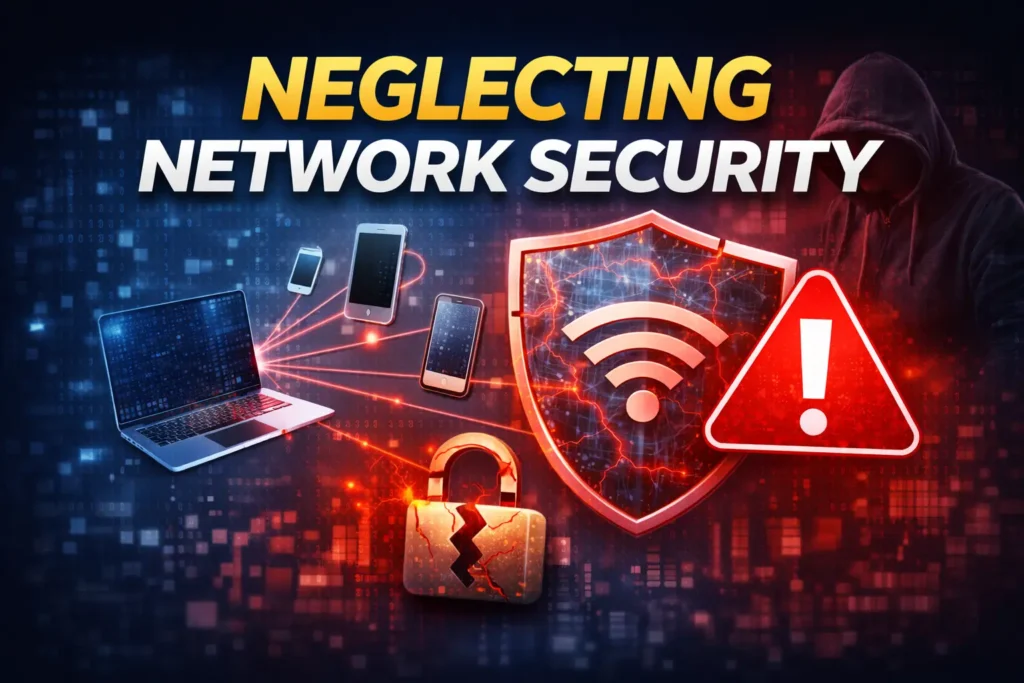
Unsecured networks are a gateway for cybercriminals.
The Problem
Businesses often overlook network security measures such as firewalls, encryption, and secure Wi-Fi configurations.
Business Cyber Security Risks
- Data interception
- Unauthorized network access
- Spread of malware across systems
Best Practices
- Install and configure firewalls
- Use encryption protocols
- Secure Wi-Fi networks with strong passwords
- Implement VPNs for remote employees
Network security is critical for protecting sensitive business data.
7. No Incident Response Plan: A Critical Cyber Security Mistake
Many organizations are unprepared to handle cyber incidents effectively.
The Problem
Without a structured response plan, businesses struggle to respond quickly during an attack.
Business Impact
- Increased damage and recovery time
- Loss of customer trust
- Regulatory penalties
Best Practices
- Develop a clear incident response plan
- Assign roles and responsibilities
- Conduct regular drills and testing
Preparedness is essential for minimizing the impact of cyber threats.
8. Overlooking Endpoint Security: A Growing Small Business Cyber Security Risk
With the rise of remote work, endpoints have become a major target for attackers.
The Problem
Devices such as laptops, smartphones, and tablets are often not secured properly.
Business Impact
- Malware infections
- Data breaches through unsecured devices
- Compromised remote access
Best Practices
- Use endpoint protection software
- Enforce device security policies
- Enable remote wipe capabilities
Endpoint security is crucial for modern business cyber security risks management.
9. Using Outdated Security Tools: A Hidden Cyber Security Mistake
Relying on outdated tools is equivalent to having no protection at all.
The Problem
Traditional antivirus solutions may not detect advanced threats like zero-day attacks.
Business Impact
- Inability to detect modern cyber threats
- Increased vulnerability to attacks
- Lack of real-time monitoring
Best Practices
- Invest in advanced security solutions
- Use AI-powered threat detection systems
- Regularly upgrade security infrastructure
Modern tools are essential for effective data breach prevention.
10. Underestimating Cyber Threats: The Most Dangerous Cyber Security Mistake
One of the biggest common cyber security errors is assuming “it won’t happen to us.”
The Problem
Many small and medium-sized businesses believe they are not targets for cybercriminals.
Business Impact
- Lack of preparedness
- Weak security systems
- Severe financial and reputational losses
Best Practices
- Conduct regular risk assessments
- Stay updated on emerging threats
- Treat cyber security as a business priority
Awareness and proactive planning are key to avoiding cyber disasters.
Advanced IT Security Best Practices for Businesses
To further reduce business cyber security risks, organizations should adopt advanced strategies:
1. Implement Zero Trust Architecture
Never trust, always verify—this model ensures strict identity verification for every user and device.
2. Regular Security Audits
Conduct periodic audits to identify vulnerabilities and improve security posture.
3. Data Encryption
Encrypt sensitive data both in transit and at rest to prevent unauthorized access.
4. Monitor Systems in Real-Time
Use monitoring tools to detect unusual activities and respond quickly.
5. Partner with IT Security Experts
Collaborating with professionals ensures your systems are always up to date and secure.
Benefits of Avoiding Common Cyber Security Errors
By addressing these cyber security mistakes, businesses can achieve:
- Stronger data protection
- Reduced financial risks
- Improved customer trust
- Compliance with industry regulations
- Enhanced operational efficiency
Cyber security is not just a technical requirement—it is a strategic investment in business growth.
Conclusion: Turning Cyber Security Mistakes into Opportunities
Cyber threats are evolving, but so are the solutions. By identifying and eliminating common cyber security errors, businesses can significantly reduce their risk exposure.
The key lies in adopting a proactive approach combining technology, employee awareness, and strategic planning. Organizations that prioritize IT security best practices not only protect their data but also gain a competitive advantage in the market.
In 2026 and beyond, cyber security will continue to be a defining factor for business success. Avoiding these mistakes today can save your business from major losses tomorrow.
Is your business vulnerable to cyber threats?
Secure your systems today with expert IT solutions.
Protect your data, strengthen your infrastructure, and stay ahead of cybercriminals with reliable cyber security services.
Email at info@cbs.com.pk
What are the most common cybersecurity mistakes businesses make?
Many businesses unknowingly put themselves at risk by:
- Using weak or reused passwords
- Ignoring software updates and patches
- Failing to train employees on phishing and scams
- Not securing networks with firewalls or VPNs
- Overlooking backup and disaster recovery plans
Why are weak passwords dangerous?
Weak passwords are easy targets for hackers. Using simple or repeated passwords can allow cybercriminals to access sensitive accounts, financial data, or personal information.
How does neglecting software updates impact security?
Outdated software often contains security vulnerabilities. Hackers exploit these weaknesses, so keeping all systems, applications, and devices updated is critical.
What is phishing and how can it be prevented?
Phishing is a scam where attackers trick users into giving personal or financial information via fake emails or websites.
Prevention tips:
- Verify the sender before clicking links
- Avoid downloading attachments from unknown sources
- Use email filters and security tools
What are the risks of not having regular backups?
Without backups, ransomware attacks, accidental deletion, or system failures can result in permanent loss of important business data. Always maintain frequent, secure backups.